


Blog
How to Choose a Kitchen Designer in London
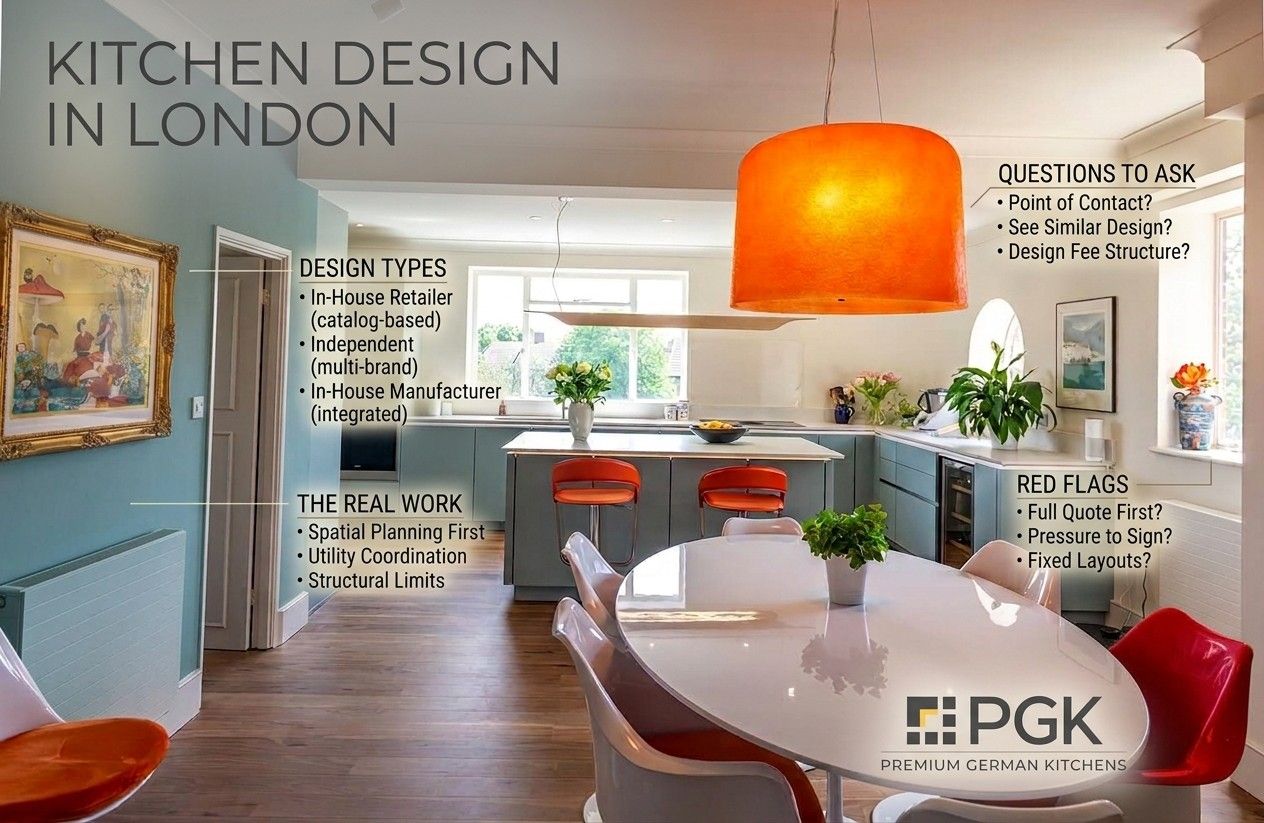
“Kitchen designer” covers a surprisingly wide range of people, an in-house designer at a large retailer working from a fixed catalogue, an independent designer who project-manages a self-build, and a designer employed directly by a kitchen manufacturer who specifies from that brand’s own system. They’re not interchangeable, and which one is right for you depends on what you actually need. Here’s how to tell the difference, and what’s worth asking before you commit to any of them.
What a Kitchen Designer Actually Does
A good kitchen designer isn’t primarily choosing finishes that’s the visible part, but it’s the smaller part of the job. The real work is spatial: working out where plumbing and electrics need to run, how appliances and storage interact with how you actually move around the room, where structural constraints limit what’s possible, and how the kitchen connects to the rest of the house. Finish and colour choices come after that groundwork, not instead of it. A designer who leads with a mood board before asking how you cook is usually skipping the part of the job that actually determines whether the kitchen works.
The Three Types of “Kitchen Designer” And Why the Difference Matters
- In-house retailer designers — employed by a large kitchen retailer, working within that company’s own range and price points. Often very experienced with high customer volume, but incentivised to sell what’s in stock or on promotion that month.
- Independent kitchen designers — not tied to any one manufacturer, specifying cabinetry, appliances and materials from multiple brands. Genuinely useful for an unusual space or a design that needs to draw on several suppliers, but you’re paying separately for design, and coordinating manufacturer, installer and designer becomes your responsibility.
- In-house designer at a kitchen manufacturer/specialist — employed by the company that also builds and installs the kitchen, specifying from that brand’s engineered system. Design, manufacture and installation sit under one roof, which removes a lot of the coordination risk. The trade-off is you’re designing within that brand’s system rather than sourcing freely from the whole market.
None of these is objectively “best”, they suit different situations. What matters is knowing which one you’re actually talking to, because the incentives and the accountability are genuinely different.
Questions Worth Asking Before You Commit
- Who do you actually work for? a single manufacturer, a retailer, or independently? (This shapes everything else on this list.)
- Will you be the point of contact from first design through to installation, or does the project hand off to someone else partway through?
- Can I see a full design (not just a rendering) for a space similar in size and shape to mine?
- How do you handle a change of mind partway through? what does that cost, and how is it managed?
- What happens if something needs adjusting after installation, who do I actually call?
- Are you paid a flat design fee, a commission tied to what I spend, or is design bundled into the kitchen price? (Worth knowing what’s actually incentivising the recommendations you’re getting.)
Red Flags Worth Taking Seriously
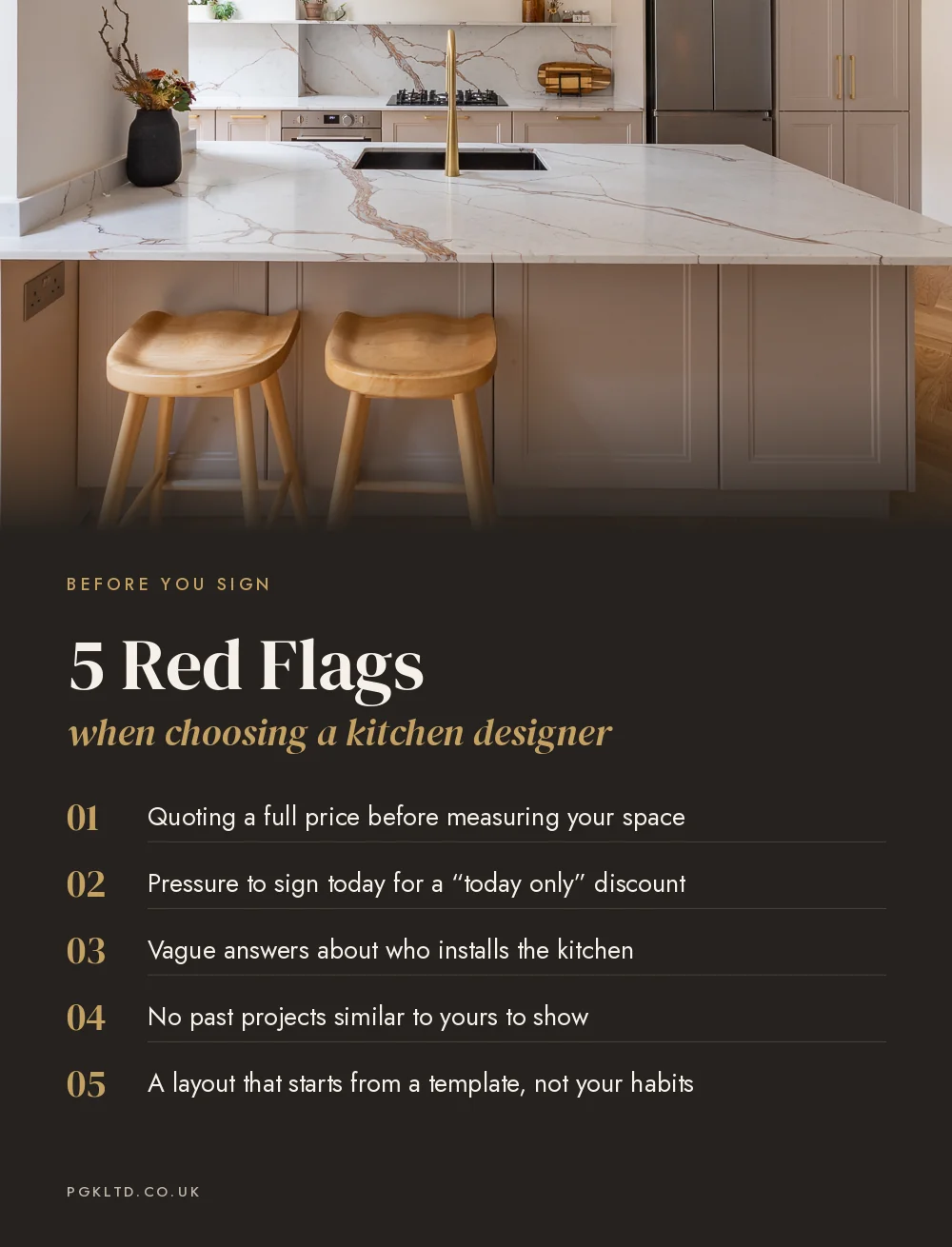
- A designer who quotes a full price before properly measuring the space or understanding how you use it
- Heavy pressure to sign on the day of a showroom visit, especially tied to a “today only” discount
- Vague answers about who actually installs the kitchen once it’s designed and ordered
- No willingness to show past projects of a similar scale, shape or budget to yours
- A design that seems to start from a fixed layout template rather than your actual measurements and habits
Why the Design Process Changes With German-Engineered Systems
Designing within an engineered system like the Schüller-built collections PGK works with, changes the design conversation in a specific way. Rather than sourcing cabinetry, hinges, drawer runners and worktop fixings from separate suppliers and hoping they align, the designer is working within a system where every component is already engineered to fit together to a tight tolerance. That doesn’t make the design more “bespoke” in the traditional furniture-making sense, it makes the outcome more predictable, because far fewer of the variables are left to be reconciled on-site during installation.
What a Genuinely Good First Consultation Looks Like
- It starts with questions about how you actually cook and live in the space not with a catalogue
- You leave with a real sense of layout options and rough budget bands, not just a single fixed quote
- The designer is upfront about what they can and can’t offer within their own range or system
- There’s a clear next step is a follow-up design, a site measure, a second meeting — rather than pressure to decide immediately
Frequently Asked Questions
What’s the difference between a kitchen designer and an interior designer?
A kitchen designer specialises specifically in kitchen layout, cabinetry, storage and the technical coordination of plumbing, electrics and appliances within that one room. An interior designer typically works across a whole home on décor, furniture and finishes, and may bring in a kitchen specialist for the technical design work rather than doing it themselves.
How much does a kitchen designer cost in London?
This varies widely depending on the type of designer. Many kitchen manufacturers and retailers include design as part of the overall kitchen price, with no separate fee. Independent designers typically charge a separate design fee, which can range from a few hundred to several thousand pounds depending on project scope.
Should I use the same company to design and install my kitchen?
There’s a real practical advantage to it; one company accountable for the whole process removes the coordination risk that comes from a designer, manufacturer and installer who’ve never worked together before. It’s not the only valid approach, but it’s worth knowing which model you’re choosing and why.
Is a more expensive kitchen designer automatically better?
Not necessarily. Price often reflects the brand or materials being specified more than the quality of the design process itself. A good fit between designer and project, someone who genuinely understands your space and how you’ll use it matters, more than the fee alone.
Want to see what a design conversation with one team, from first sketch through to installation, actually looks like? Book a free design consultation, or visit our Bounds Green, Wimbledon, Maida Vale or Amersham showroom to talk it through in person.
Related Posts
Walk-In Pantry Ideas for Small London Kitchens
Open shelving in the kitchen can feel like a breath of fresh air—literally. It opens up the room, adds personality, and gives…
Small Kitchen Ideas That Actually Work in a London Home
Open shelving in the kitchen can feel like a breath of fresh air—literally. It opens up the room, adds personality, and gives…
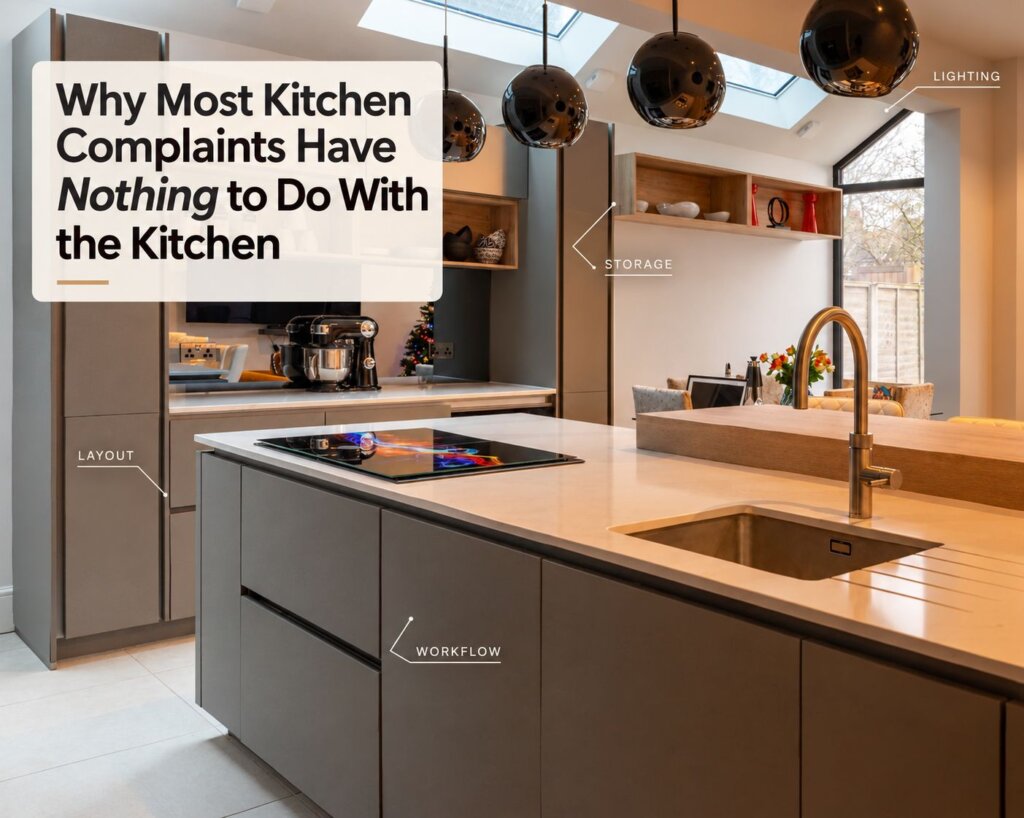
Why Most Kitchen Complaints Have Nothing to Do With the Kitchen
Open shelving in the kitchen can feel like a breath of fresh air—literally. It opens up the room, adds personality, and gives…
Ready to Design Your Dream Kitchen?
Start your journey with a free design consultation at our London showrooms. Explore our Premium German Kitchens, discover elegant finishes, and collaborate with our expert designers to bring your vision to life. Book your appointment today and take the first step towards your dream kitchen.


